
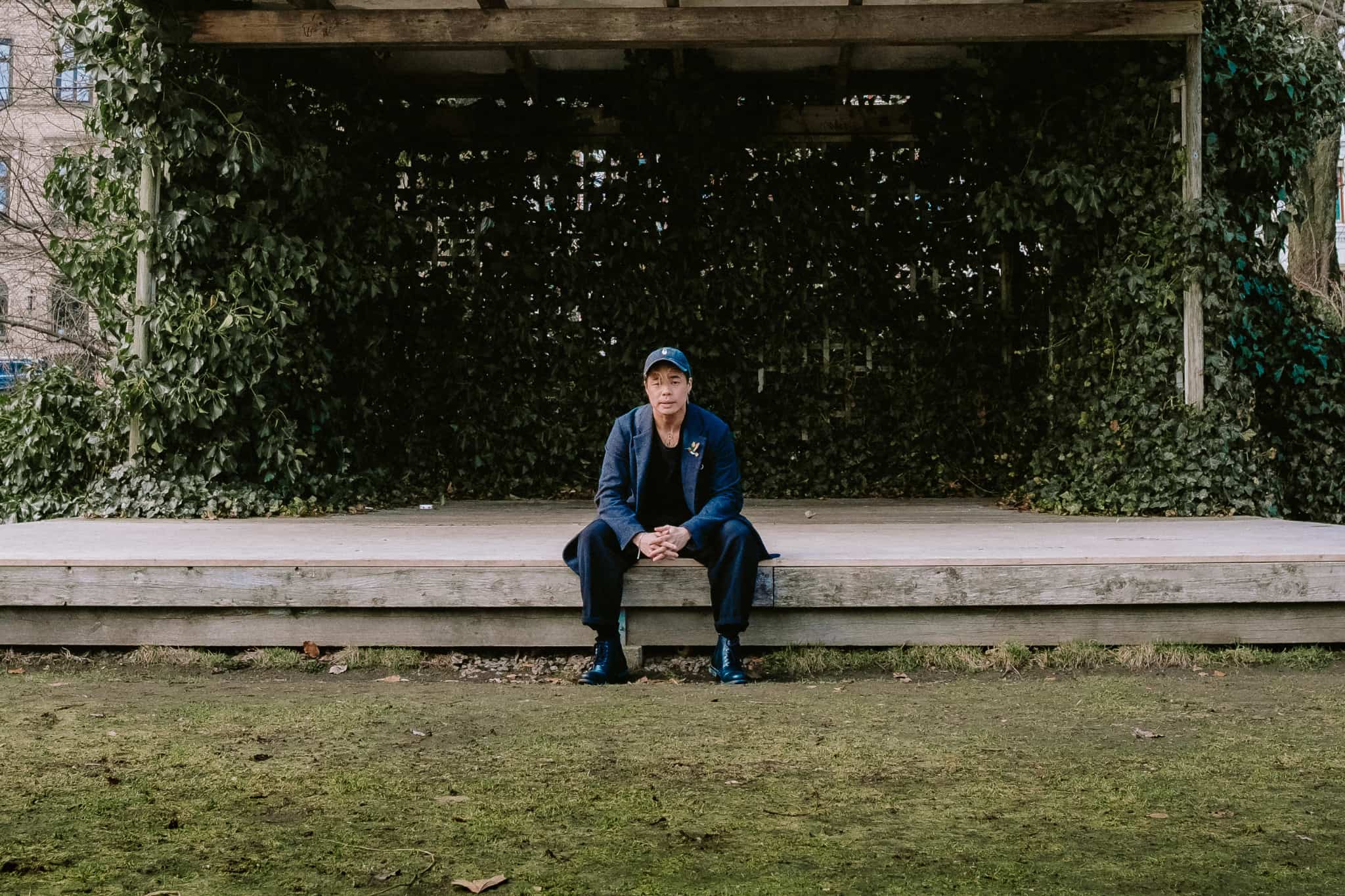
A personal commitment to human rights
For many years, Danny Lam has been engaged in volunteer work related to human rights. It’s a cause he cares deeply about and something he often wished he could dedicate more time to.
At the same time, he built his professional career as a UX designer. For a long time, these two parts of his life existed side by side. Both were meaningful to him, but they rarely intersected.
That began to change when accessibility started to play a larger role in his professional work. For the first time, Danny saw how the work he did as a designer could directly support the values he had long cared about through his volunteer engagement.
Suddenly, there was a space where his personal commitment and his professional expertise could come together naturally.
Designing for real impact
A defining moment in Danny’s career came when he had the opportunity to work with the Swedish National Agency for Special Needs Education and Schools (SPSM).
The agency’s mission is to ensure that children and young people with disabilities receive equal access to education. To support that mission, SPSM has developed a wide range of digital services, apps, and tools designed to meet different needs. This commitment was recognized when SPSM.se was named Best Role Model in Digital Accessibility in Funka’s Digital Inclusion Award 2025.
Being able to contribute to this work felt deeply meaningful. It meant helping ensure that SPSM’s websites truly functioned for the people they’re meant to serve. For Danny, it was an opportunity to work at the intersection of design, inclusion, and impact.
As he explains, working with accessibility quickly changes how you approach design decisions.
“When you design for people who truly depend on these services, every detail matters,” Danny says. “It makes you think much more carefully about how something actually works for the user.”
.jpg?width=800&height=442&name=Sk%C3%A4rmavbild%202026-03-17%20kl.%2013.45.08%20(2).jpg)
SPSM.se digital learning interface
Why accessibility is still treated as optional
Danny describes the experience as a genuine privilege. Accessibility, he explains, is still too often treated as something that’s “good to have” rather than “must have.”
Throughout his career, he’s seen projects where accessibility is deprioritized, postponed, or pushed to the very end of the backlog. It becomes something teams address only if time and budget happen to allow it.
As Danny puts it, accessibility is often treated as something teams will “fix later” if time allows.
“But if digital services are meant for everyone, accessibility can’t be optional,” he says. “It has to be part of the process from the beginning.”
Accessibility is both a legal requirement and a fundamental question of inclusion and human rights. Digital services should work for everyone, not only for those who happen to fit within the assumed norm.
Reviewing nearly 20 digital services
During his assignment with SPSM, Danny reviewed nearly 20 different websites and digital services.
The work was extensive, but never overwhelming. By approaching the task methodically, he created a clear structure for the entire process: which pages had been reviewed, which were in progress, which steps had been completed, and which tests remained.
Each site was examined individually using a combination of manual and automated testing methods. Throughout the process, Danny maintained a continuous dialogue with the SPSM team.
This approach created transparency and helped build a shared responsibility for accessibility within the project.
New perspectives on assistive technologies
The work also gave him entirely new perspectives. Danny encountered technologies and assistive tools he had previously known little about, including Braille keyboards.
Seeing how people actually navigate digital interfaces using these tools changed how he thinks about design.
“When you see how someone interacts with a digital service using assistive technology, it completely shifts your perspective,” Danny explains. “You realize how even small design choices can make a big difference.”
%20(1).jpg?width=800&height=559&name=bild%20(6)%20(1).jpg) Danny Lam working on a project
Danny Lam working on a project
Accessibility concerns everyone
Reflecting on the project, Danny says he feels deeply grateful for the trust SPSM placed in him and for the opportunity to focus so fully on accessibility as a designer.
At the same time, he emphasizes that accessibility isn’t only about supporting “others.” It’s something that affects everyone.
“At any point in life, we might find ourselves needing adjustments,” Danny says. “It could be a permanent disability, a temporary injury, or even something as simple as trying to complete an important task while standing on a moving bus during your commute.”
Moments like these make it clear that accessibility isn’t a niche concern but a fundamental part of good design. For Danny, the work with SPSM confirmed that he’d found the right direction in his career.
Accessibility, he explains, is fundamentally about usability, empathy, and respect for people’s different circumstances. It’s also where his volunteer engagement in human rights finally meets his professional role as a UX designer.
Looking ahead
His hope is that more organizations will see accessibility as a natural and integrated part of everything they build, rather than something added afterward. It should be considered from the start of the design process and treated as a core part of building digital services.
Because accessibility isn’t an extra option. It’s a human right. And designing with accessibility in mind ultimately means designing for everyone.
About Danny Lam
Danny Lam is a Senior UX Designer at Twoday, specializing in user experience, accessibility, and digital services within the public sector. With over six years of experience in UX, he works closely with organizations to design services that are intuitive, inclusive, and grounded in real user needs. Throughout his career, Danny has collaborated with several public institutions, helping them improve complex digital platforms through user research, service design, and accessibility-focused design processes.
Beyond his consulting work, Danny is also the founder of TNKVRT, one of Sweden’s largest social platforms focused on human rights and social issues. Through the platform, he amplifies underrepresented voices, encourages dialogue, and engages a large community in discussions about equality, empathy, and social responsibility.
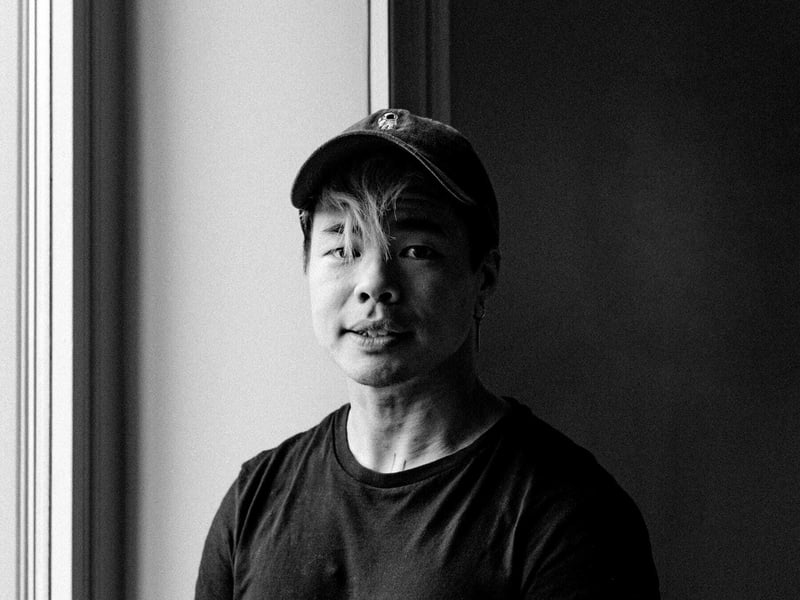 Danny Lam, Senior UX Designer at Twoday Sweden