Skip to content
twoday-offering-eGovernment-header

Government

Services that feel seamless to citizens. Systems that stay secure and resilient.

Public organisations carry the services society cannot do without. They also carry fragmented data, legacy systems and complex regulation. Twoday works with Nordic public institutions to connect services, data and workflows around the citizen, with security and accountability built in.

The expert view

“Most governments use AI somewhere. Few measure whether it works.”

Nicolai Svendsen— Industry director

Watch now

Trusted by

Mattilsynetkeva-1FiskeristyrelsenPuolustusministerioVyUDIBrønnøysundregistreneHelsedirektoratet-logo-1
What’s shaping your industry

Your trusted partner for secure public services

For years, Twoday has advised Nordic public organizations on transformation and delivered hundreds of solutions. We know public services, their regulation and their citizens’ expectations from the inside.

Citizens expect public services to be as simple as the best commercial ones. Budgets are tight, so governments must work more efficiently and protect their data across borders. The biggest risk for leaders is treating this as a technology challenge. Technology enables the change, but how services are organized and delivered makes it happen. The shift is from services built around institutions to services built around people’s complete journeys.

Public organizations must transform while they run. Critical systems cannot be switched off during modernization, so change has to happen in steps. Whatever your starting point, the question is how to shape services around citizens while staying secure. We help you answer that.

network
15%

of public institutions have fully mapped their technology dependies

globe-lock-1
76%

of public organizations put AI on their sovereignty agenda.

shield-check (2)
32%
of recorded EU cyber incidents in 2025 targeted public administration, the most of any sector.
  • Vy_500
    Customer story
    vy_2
    213 million

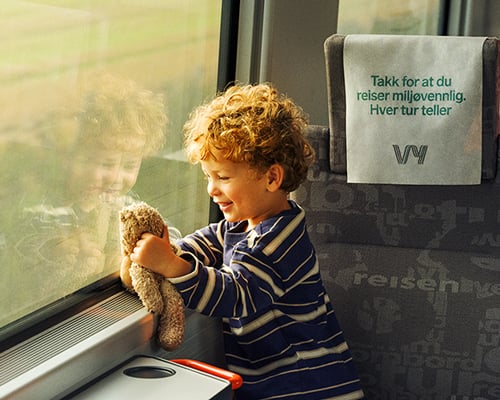
    Improving public transportation with machine learning for 213 million passengers

    Providing conductors with data-driven insights for more targeted and effective checks and increased accuracy


  • Bronnoysundregistrene_500
    Customer story
    Brønnøysundregistrene
    187 million

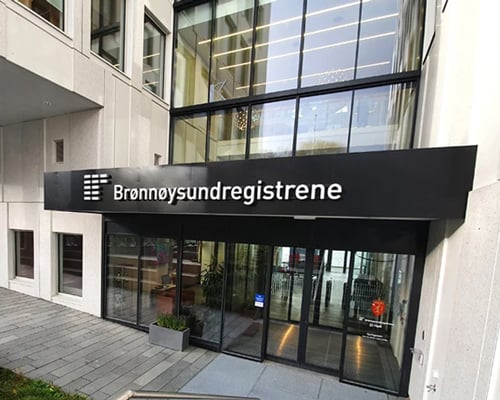
    NOK 187 million saved annually with the updated Register of Mortgaged Movable Property

    Across register modernisation, automation and AI, the partnership is reducing manual work, improving efficiency and making it easier for people and businesses to get things done.
  • The-Ministry-of-Defence’s-new-online-service-strengthens-Finland’s-security-6
    Customer story
    Puolustusministerio
    4,000

    The Ministry of Defence’s new online service strengthens Finland’s security

    Since 2020, the Ministry of Defence has made approximately 4,000 permit decisions regarding property acquisitions by buyers outside the EU and EEA. Decisions are made daily, and the service significantly simplifies and accelerates this work.

  • person-looking-at-computer
    Customer story
    2,5 million

    Through modernization, STAR has achieved remarkable results including a cut in hosting costs by DKK 2.5 million.

    But also a high delivery stability in both software and organization has given STAR an efficient and future-proof setup. 


The forces that decide how fast AI pays off in the public sector

The practical challenge is transforming government while it is still running. We help in four connected ways:

handshake

Citizen journeys and digital services

Design and build services around people's complete journeys, managed as products with clear owners and continuous improvement.

shield

Connected data and workflows

Data platforms and integration that connect services across institutions and, where needed, across national borders, with governance and auditability from the start.

timer

Sovereign platforms and responsible AI

Cloud foundations for critical services, modernization in stages, and AI with measurable outcomes in document handling, information retrieval, fraud detection and decision support. You decide where data lives and who can access it. 

Cyber security and threat resilience

Protection against the threats public organizations face most: DDoS, ransomware, data breaches and supplier compromise. Detection, response and NIS2-aligned controls keep critical services available when they are attacked.

Solutions we build to solve this

  • Twoday-AI-engine-energy-and-utilities
    • Engine
    • 14 offerings

    Twoday AI Engine

    From first investment to AI you control. Start with the part you need and add more as you go.

    Read more
  • crop_fe5_u8L0_09a13155-f971-462a-ab6e-f39393ed144b
    • Service
    • Start here

    AI Value Discovery

    Know what to fund in AI, and in what order. A board-ready roadmap and investment case in 3–5 weeks.

    Read more
  • person-looking-at-computer
    • Service

    AI Readiness Assessment

    Roll out AI on a secure foundation. Know where your environment stands and what to do first.

    Read more
  • desktop-workstation
    • Service

    Agentic Engineering

    Make AI-native delivery the way your engineering teams work, with governance built in.

    Read more
  • back-of-computer-monitor
    • Tool

    Insight Flow

    Start development from a validated, implementation-ready blueprint.

    Read more

“The practical challenge is transforming government while it is still running.”

The expert viewVideo

Nicolai Svendsen, Industry Director for Government, spends every day close to the challenges and opportunities the public sector is facing.

Speaker
Nicolai Svendsen
Industry
Government
Area
AI
Length
01:31
Interview

Frequently asked questions

01How does a government agency get started with AI?

Start by deciding where AI will pay off, before you build anything. Start with the problems, not the technology. List the services and processes where delays, errors, or workload hurt most, then rate each candidate on value and on feasibility.   Check that the data it needs exists, is accurate, and that you are allowed to use it. Make sure your environment is secure before you give staff AI tools: review who has access to what, and which AI tools people already use without approval. Pick one or two use cases, name an owner for each, and agree in advance how you will measure success. Run small pilots with the people who will use the result, and plan from the start for how a pilot becomes daily practice, including training and changes to how work is done. Set simple rules for data use and human oversight before the first pilot goes live. You can use the Twoday AI Engine to help you discover the value. 

02What does the EU AI Act mean for public sector organizations?

Annex III of the AI Act lists specific public sector uses as high-risk. Examples are AI that public authorities use to evaluate eligibility for essential public benefits and services, AI that assists the examination of asylum, visa, or residence applications, AI that law enforcement uses to assess the reliability of evidence, and AI that assists a judicial authority in interpreting and applying the law. Whether your system counts depends on its intended purpose. The Digital Omnibus (Regulation (EU) 2026/1744) moved the high-risk requirements for these systems to 2 December 2027, while the bans on prohibited practices already apply. Start by listing and classifying your AI systems. Responsible AI Advisory maps AI Act obligations onto the controls you already run under ISO 27001, NIS2, and GDPR. 

03Which public sector organizations does Twoday work with?

You will find Twoday behind public services across Denmark, Finland, Sweden, and Norway. We work as a strategic partner to government agencies in areas such as immigration and integration, justice, health,  energy, transportation and many more  Our customers range from ministries and municipalities to national agencies and the teams who serve citizens every day. What Twoday customers share is the need for a partner who understands the conditions you work under and stays with you after go-live. 

04How do you measure the value of AI in a government agency?

Measuring AI is harder in government than in business, for three reasons. The benefits often land outside the budget that paid for them, such as shorter waiting times for citizens. Many agencies never recorded how long a process took before AI, so there is nothing to compare with. And time saved is not money saved until you decide what staff do with it. 

Decide what you will measure before you build. Good measures are time saved on a named process, processing time per case, error rates, and whether staff actually use the tool. Set a baseline first, compare after a few months, and report the result to the management that funded it. Public value also includes service quality for citizens, so pair efficiency figures with a view of how the service feels to the people who use it.

05Should we modernize or replace a legacy system?

Decide per system, based on three questions. Does it still support the process it was built for? Can you change it at a pace the law and your users demand? What does each year of keeping it cost in risk and operations? Modernizing in steps keeps services running and spreads the cost. Replacing makes sense when the system’s logic no longer fits the process. Many organizations end up doing both across their portfolio.

06What should a public sector AI governance model include?

Five things: a named owner for each AI system, a register of systems with their risk class under the AI Act, rules for data use and human oversight, a process for approving new use cases, and monitoring once a system is in production. Reuse the controls you already run for information security and data protection rather than building a parallel structure.

Driving innovation through partnerships in public sector

We collaborate with leading technology providers and public sector innovators to co-create the future. From AI-powered case management to secure citizen platforms, we help public organizations deliver on their mission in a rapidly evolving world.

Partner with us!

Let's talk