
HUS billing renewal drives savings and agility
Customer: HUS, Helsinki University Hospital
Industry: Health and life sciences
Location: Uusimaa, Finland
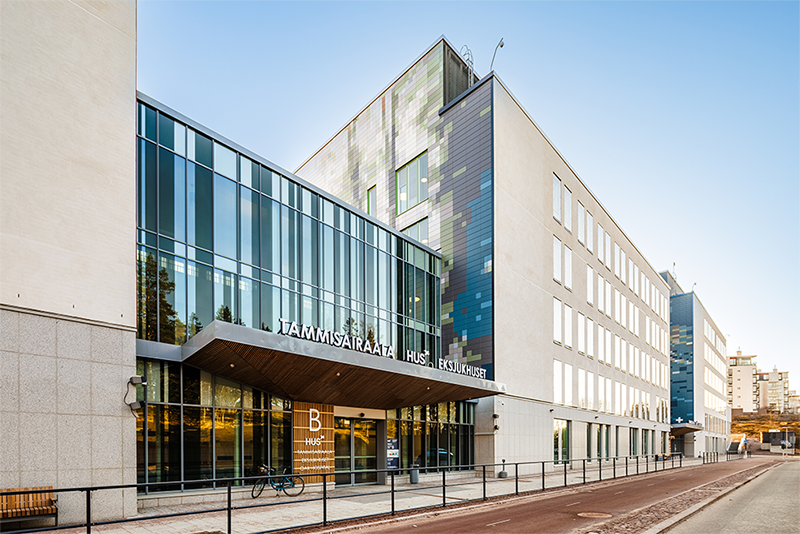
HUS is Finland’s largest healthcare organization and is responsible for organizing specialized healthcare in the Uusimaa region. HUS also has nationwide responsibility for treating several rare and severe diseases.
The problem: End-of-life legacy systems and fragmented billing solutions
At the start of the project, HUS had two separate billing systems – one for organizational billing and one for customer billing. The goal was to move to a single optimized system that would automate billing. Both systems were technically outdated and had very limited functionality. The renewal aimed to achieve cost savings and create a more user-friendly system that would reduce manual work.
The solution: Agile and reliable billing system
In 2022, the Atlas system was introduced to automate both customer and organizational billing. We have been HUS’s long-term partner in renewing and maintaining the billing system. The renewal began as a multi-supplier model, with us responsible for developing customer billing. Following the 2024 tender, we assumed full responsibility for the development and maintenance of the entire billing system and the related DevOps activities.
The Atlas billing system plays an important role at HUS. A 15-person Twoday team is responsible for its development and maintenance. Atlas processes more than EUR 2 billion in billing annually and serves over 700,000 patients. Billing must therefore operate smoothly, accurately, and reliably in all situations.
Atlas productizes and prices healthcare services, generates invoices, and provides reporting data to support management. The system supports complex pricing rules, including payment caps and statutory requirements.
The billing system was implemented using a microservices architecture in a cloud environment. Modern software development technologies are complemented by automation solutions that improve efficiency and control, such as a rule engine. The rule engine enables changes to be implemented more quickly than through extensive IT projects, allowing for more agile responses to legislative changes. For example, when the 2021 reform of legislation concerning client fees made visits free of charge for minors, pricing could be adjusted using the rule engine without a separate, extensive IT project.
DevOps ensures the reliability and functionality of the solution
The project proved to be considerably broader in scope than originally planned due to the extent and complexity of the underlying customer billing specifications. Legislation strongly governs how the system operates, particularly in customer billing, increasing its complexity and requirements. However, the challenges identified during the project were resolved through good collaboration.
The rule engine enables HUS to manage rules independently and contribute to maintaining the billing system, reducing its dependence on the software development partner. In practice, however, the changes are often so complex that developers are still needed. Legislative changes, among other factors, create an ongoing need to modify and develop the system.
HUS manages the current system itself, resulting in savings on license fees compared with the previous systems.
The results: Savings and agility in managing changes
In 2022, the Atlas system was introduced to automate both customer and organizational billing. We have been HUS’s long-term partner in renewing and maintaining the billing system. The renewal began as a multi-supplier model, with us responsible for developing customer billing. Following the 2024 tender, we assumed full responsibility for the development and maintenance of the entire billing system and the related DevOps activities.
The Atlas billing system plays an important role at HUS. A 15-person Twoday team is responsible for its development and maintenance. Atlas processes more than EUR 2 billion in billing annually and serves over 700,000 patients. Billing must therefore operate smoothly, accurately, and reliably in all situations.
Atlas productizes and prices healthcare services, generates invoices, and provides reporting data to support management. The system supports complex pricing rules, including payment caps and statutory requirements.
The billing system was implemented using a microservices architecture in a cloud environment. Modern software development technologies are complemented by automation solutions that improve efficiency and control, such as a rule engine. The rule engine enables changes to be implemented more quickly than through extensive IT projects, allowing for more agile responses to legislative changes. For example, when the 2021 reform of legislation concerning client fees made visits free of charge for minors, pricing could be adjusted using the rule engine without a separate, extensive IT project.
In addition to the billing system, we have worked with HUS in recent years to standardize the management, maintenance, and archiving of patient and care instructions and to develop a document management system.
"The result is a reliable system that can adapt flexibly to changing requirements."
Ready to modernize your systems?
Get in touch!