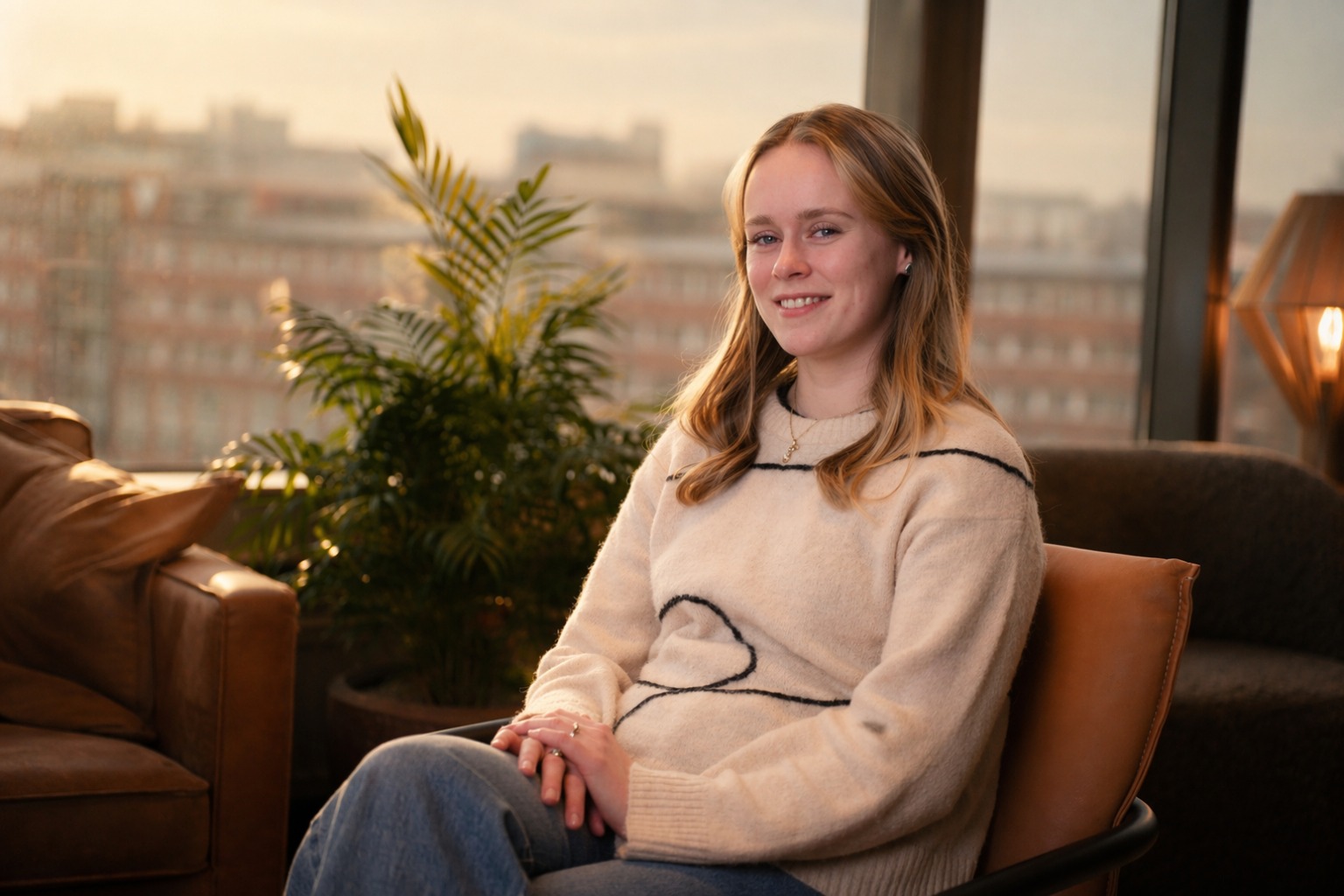
Meet Anine
IT Consultant | Twoday Norway
"I ended up taking down the whole website for 12 hours. But I learned so much from it."
She took down a website for 12 hours. It ended up being one of the most valuable moments in her career.
Anine Syrstad was 25 when she deployed a system she had largely built herself. The rollout didn’t go as planned. The site went down, stayed down, and she had to fix it.
“I ended up taking down the whole website for 12 hours. But I learned so much from it, and after fixing the problems, I felt like I had really made an impact. Now, several people use a system I built as part of their daily work, which is very cool.”
That moment says something people don’t often talk about. Real work isn’t clean. It’s unpredictable, sometimes uncomfortable, and that’s exactly where learning actually happens.
From lecture halls to production systems
Anine studied Computer Science at NTNU in Trondheim, specializing in artificial intelligence. The shift from university to working life wasn’t as big as she expected, but the pace definitely was.
“The transition from university to professional life has been very positive. I find it far more motivating to work on real‑world projects, and I’ve experienced a much steeper learning curve than I did during my studies.”
At Twoday Norway, that curve starts early. The solutions she works on aren’t prototypes. They’re built for large public sector organizations, used by people in their daily work.
One week she’s working with generative AI. Next, she’s configuring OpenAI’s API or Azure Document Intelligence.
For the past four months, Anine has been working with AI systems at the Norwegian Water Resources and Energy Directorate (NVE). Before that, she helped build a RAG-based web application designed to simulate cyberattacks and security scenarios.
Complex work. Real impact. No waiting period.
.jpg?width=3024&height=4032&name=Image-Edit%20(1).jpg)
The moment it clicks
Technical skills are only part of the job. The harder part comes after.
“What felt most difficult at first was how to make colleagues and customers trust my advice. I thought it would take years before I felt like they truly believed in me. But after working with a couple of different customers and teams, I’ve noticed that they do trust me, and I’ve become more and more confident in my work and the solutions I deliver.”
Like many early-career professionals, she experienced moments of imposter syndrome. What made a difference wasn’t avoiding it. It was the environment around her.
Starting alongside others in the same situation made it easier to share uncertainty, compare experiences, and figure things out together. That part often goes unnoticed, but it matters more than most people expect.
Growing into the role
What stands out isn’t just the pace of learning, but how that learning actually happens.
Anine points to how open people are when it comes to sharing knowledge. Support doesn’t stop with the immediate team. It’s normal to reach out to others across the organization, ask questions, and learn from specialists working with different technologies.
At the same time, there’s structure behind it. Dedicated competence leads across key areas make it easier to get guidance when it’s needed and help teams move forward without getting stuck.
It’s not about knowing everything. It’s about knowing how to move.

"Life certainly doesn't become boring once you start working here."
More than just technology
What she didn’t expect was how working life would feel outside of project work.
“Life certainly doesn’t become boring once you start working here.”
People spend time together after hours and on weekends. It creates a social and inclusive environment, but it doesn’t feel forced. It grows naturally from the way people work together.
Starting a career in tech isn’t about getting everything right from the start. It’s about doing real work, learning quickly, and building confidence through experience.
And sometimes, it starts with taking down a website for 12 hours.