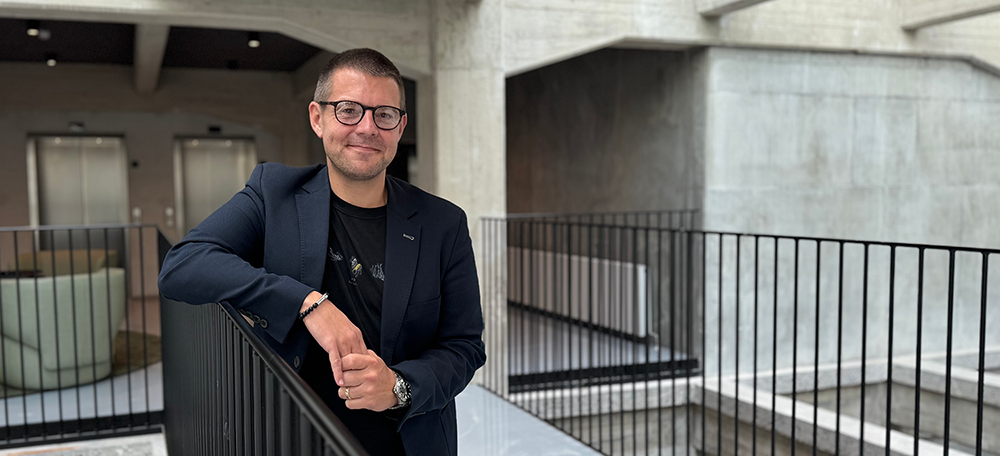
Meet Thomas
Tech Evangelist | Twoday Denmark
Redefining development in the era of AI agents
Thomas Martinsen does not chase trends. He focuses on where technology creates durable business value and how it can be applied in ways that are technically sound and commercially grounded. That focus has shaped a career that bridges deep technical insight, business understanding, and early access to Microsoft’s AI ecosystem.
Today, he works as a tech evangelist and strategic advisor at Twoday, helping organizations translate AI potential into direction, architecture, and responsible implementation.
A bridge between technology and business
Thomas’ defining strength is his ability to connect layers that are often separated: models and governance, platforms and operating models, strategy and execution.
“Early in my career, I leaned into Microsoft,” he says. “That was around the turn of the millennium, and since then I’ve followed their technology closely. I’ve always found it fascinating to see how technology can move business forward and bring people along on the journey.”
In practice, his role is less about building individual solutions and more about setting direction. He works in early phases: identifying where AI creates leverage, shaping architectural choices, and ensuring that initiatives are anchored in business rationale from the outset.
For him, AI is not a “smart layer” added on top of existing systems. It is structural. Models, data, platforms, governance, and security must work together. If they do not, the business impact will be limited.
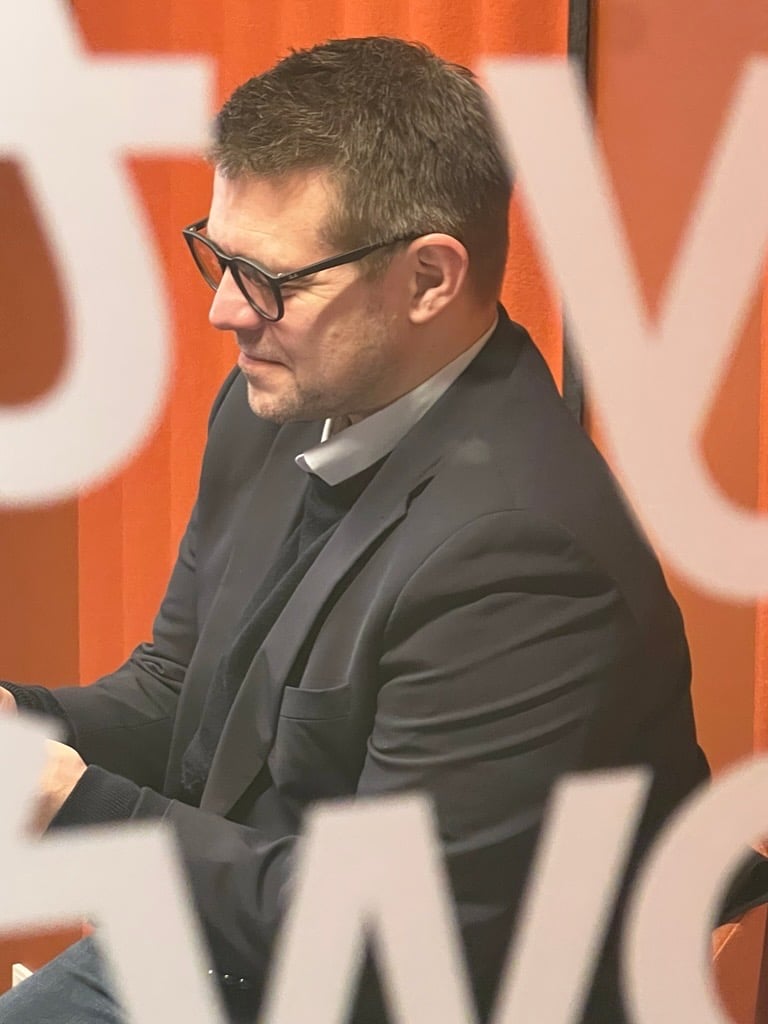

A non-linear path into technology
Thomas did not start in IT. His educational background is in business, and his first job was as a bank advisor.
“That wasn’t the right fit for me,” he says. “Standing in front of a 19-year-old student and saying: You can only get an overdraft if you start a pension plan. That didn’t align with my values.”
The business foundation, however, proved useful. It gave him a clear understanding of incentives, risk, and return on investment. Perspectives that remain central in his advisory work today.
His technical curiosity goes back much further
“Back in school, I programmed calculators. The teachers didn’t really understand it, so I sold the solutions to classmates for exams. And before that, I was coding games on a Commodore 64. The interest has been there since I was 10 or 11.”
That combination with business education and early hands-on programming makes it natural for him to move between boardroom discussions and technical architecture.
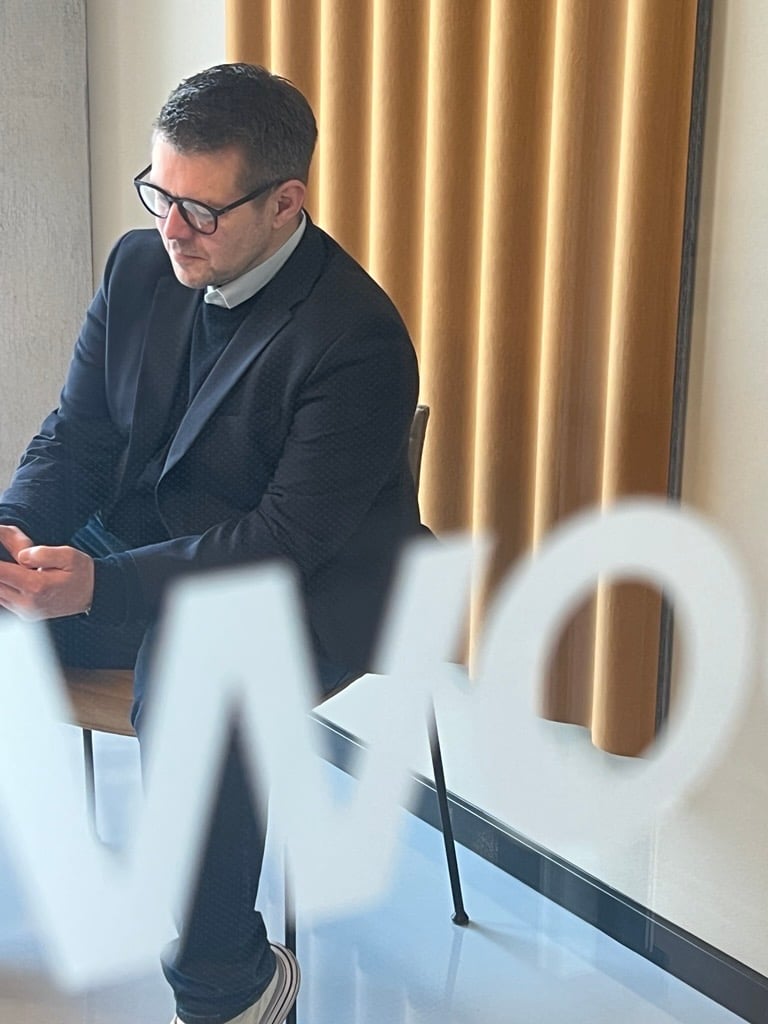
“Back in school, I programmed calculators. The teachers didn’t really understand it, so I sold the solutions to classmates for exams.”
Microsoft AI MVP and Regional Director
Thomas holds two awards that position him close to Microsoft’s technology roadmap: Microsoft AI MVP and Microsoft Regional Director.
He previously earned the MVP title in the 2000s, stepped away during a period focused on family life, and later returned. Combined with the Regional Director role, it provides both recognition and responsibility.
“For me, it’s partly recognition: Microsoft sees what you’re doing and values it,” he says. “But it also gives you the chance to get involved early because you’re a trusted partner and can help shape things. You get a voice that’s heard.”
He describes the role as a two-way bridge. On one side, he brings insight into upcoming technologies and platform direction to customers. On the other, he brings structured feedback from real-world implementations back to Microsoft.
“You can go to customers and say: If this doesn’t work for you, tell me how you want it to work. And then take that feedback back to Microsoft: This is what customers are experiencing.”
In a landscape where AI platforms, copilots, governance frameworks, and security models evolve rapidly, that position is strategically important. It allows him to advise based not only on documentation, but on dialogue and early exposure.
Agent-driven development
One of the shifts Thomas sees on the near horizon is what he refers to as Agent-Driven Development (also known as ADD).
In his view, AI agents will not simply assist developers. They will become active participants in design, implementation, testing, and operations. Development will move from writing every line of code manually to orchestrating systems of agents that reason, plan, generate, validate, and iterate.
Agent-driven development changes the definition of what it means to be a developer. The role shifts from primarily producing code to designing intent, constraints, architecture, and feedback loops. Developers become responsible for framing problems correctly, defining guardrails, and ensuring that agent behavior aligns with business rules, compliance requirements, and quality standards.
This does not reduce the need for technical depth. On the contrary, it increases the demand for architectural thinking, platform understanding, and governance discipline. When agents can generate and modify code at scale, mistakes also scale. Robust foundations become critical.
For Thomas, this shift is not theoretical. It has implications for skills, team structures, and consulting models. Organizations will need to rethink how they build software, how they measure productivity, and how they ensure accountability when part of the execution is delegated to autonomous systems.
AI is reshaping consulting
Thomas is explicit about the broader implications of AI.
“AI is changing the underlying business model,” he says. “And I truly hope I can help drive that as a positive change that makes sense and delivers long-term impact.”
For consulting firms, AI does not simply add new services. It alters how value is created, how solutions are delivered, and how competencies are structured.
Within Twoday, his focus is on enabling that shift in practice: strengthening technical capabilities, refining ways of working, and ensuring that engineers and data scientists can navigate the complexity of modern AI platforms responsibly.
The ambition is not experimentation for its own sake, but durable capability. Strategy, implementation, and adoption must be connected.
From presales to strategic direction
Thomas’ work is primarily strategic and often anchored in presales and early dialogue. He is not focused on long, single-project execution. Instead, he helps organizations clarify ambition, assess technical and organizational readiness, and design the first concrete steps.
The core of the work is consistent: ensuring that AI initiatives are business-driven, technically robust, and responsibly grounded from the start.
Beyond his external advisory work, Thomas plays an active role in driving AI internally within Twoday. He contributes to shaping AI initiatives in his own business unit, collaborates closely with the Danish AI team, and is involved in the company’s global AI initiative. His focus is twofold: enabling AI effectively within Twoday’s own ways of working and strengthening the firm’s AI offerings to customers. This includes aligning capabilities, defining patterns and guardrails, and ensuring that AI adoption is both technically robust and commercially relevant across markets.
Community and knowledge sharing
Throughout his career, Thomas has been active in professional communities. In the early 2000s, he helped establish a .NET community in Copenhagen. The principle remains the same today: knowledge only creates value when it is shared.
“Microsoft spends a lot of time and energy sharing knowledge with us and sparring with us. That knowledge needs to get out to communities and to people who care about it,” he says.
He sees community engagement as part of professional responsibility. Building bridges between individuals working alone in small companies and teams operating in complex enterprise environments.
Technical depth with strategic clarity
When Thomas speaks at webinars such as “AI-driven companies of the future,” the perspective is consistent: technical depth combined with strategic clarity and organizational awareness.
He operates at the point where direction is defined. Where ambition is translated into architecture, governance, and operating model choices that can scale.
For him, AI is not an isolated initiative. It is a structural shift that affects how software is built, how organizations operate, and how value is created. That is the space where he works: at the intersection of platform, people, and long-term impact.